Close-hauled
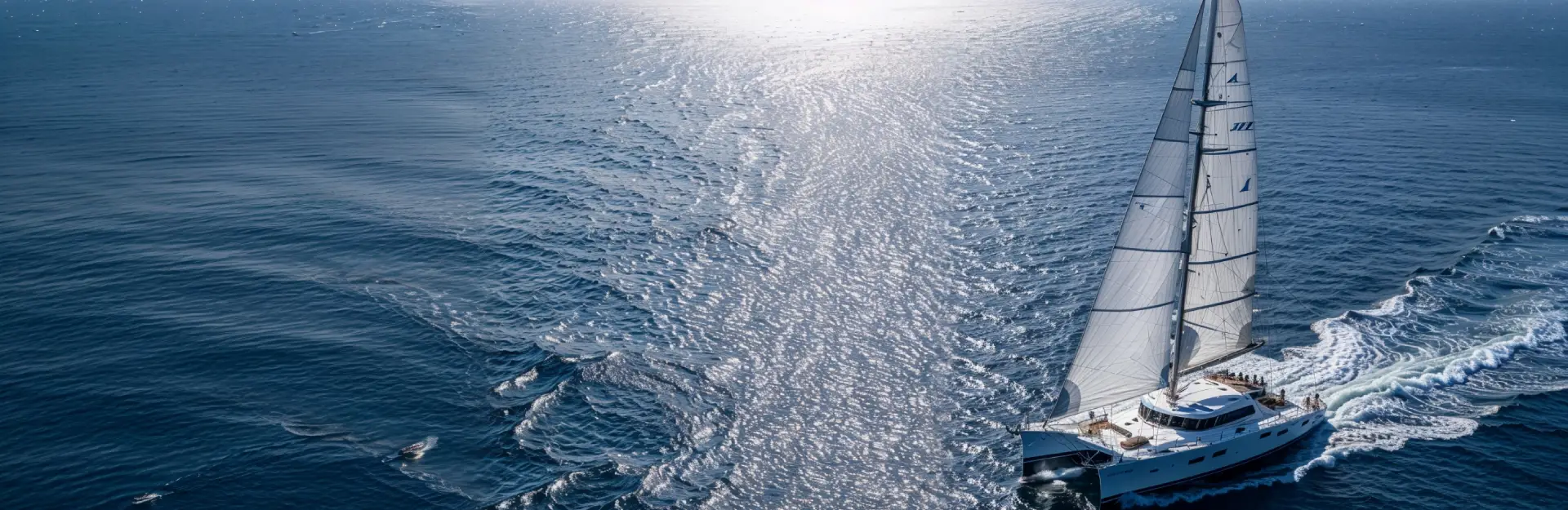
A sailing craft is said to be sailing close-hauled(also called beating or working to windward) when its sails are trimmed in tightly, are acting substantially like a wing, and the craft’s course is as close to the wind as allows the sail(s) to generate maximum lift.
Beam Reach
This is a precise point of sail and is exactly perpendicular (or 90°) to the direction of the wind, from the direction of the wind. Here the sails are let out half way and the centreboard on sailing dinghies is set to ½ down. Generally for most boats this is an efficient point of sail and can provide for the fastest speeds.
A “close reach” is a course closer to the true wind than a beam reach but below close-hauled; i.e., any angle between a beam reach and close-hauled. The sails are trimmed in, but not as tight as for a close-hauled course.
A “broad reach” is a course further away from the true wind than a beam reach, but above a run. In a broad reach, the wind is coming from behind the sailing craft at an angle. This represents a range of wind angles between beam reach and running downwind. On a sailboat (but not an iceboat) the sails are eased out away from the sailing craft, but not as much as on a run or dead run (downwind run). This is the furthest point of sail, until the sails cease acting substantially like a wing.
Run
With the wind directly behind you this is the trickiest point of sail to steer as it can be quite unstable. On a run your sails can be let out on opposite side of the boat to catch the wind (sailing goosewinged) or a big sail called a spinnaker can be set.
Tack
Tack is a corner of a sail on the lower leading edge. Separately, tack describes which side of a sailing vessel the wind is coming from while under way—port or starboard. Tacking is the maneuver of turning between starboard and port tack by bringing the bow (the forward part of the boat) through the wind. Jibing is the maneuver of turning from one tack to another by bringing the stern (rear of the boat) through the wind.
A starboard tack is when the wind is blowing from the starboard side of the vessel, while a port tack is when the wind is blowing from the port side of the vessel, simple. An alternative way to identify which tack you’re on and which easily helps you identify the tack other vessels are on, is if the sails are on the starboard side of the vessel, then the vessel is on a port tack, and if the sails are on the port side of the sailing boat, then the boat is on the a starboard tack.
Windward
Is the direction upwind from the point of reference, alternatively the direction from which the wind is coming.
Leeward
Is the direction downwind (or downward) from the point of reference. The leeward region of mountains generally remains dry as compared to the windward. The side of a ship that is towards the leeward is its lee side. If the vessel is heeling under the pressure of the wind, this will be the “lower side”.
Heading Up
To bring the boat closer to the direction of the wind.
Bearing Away
To get the boat away from the direction of the wind.
Tacking
Tacking or coming about is a sailing maneuver by which a sailing vessel, whose desired course is into the wind, turns its bow toward the wind so that the direction from which the wind blows changes from one side to the other, allowing progress in the desired direction. The opposite maneuver to tacking is called jibing, or wearing on square-rigged ships, that is, turning the stern through the wind. No sailing vessel can move directly upwind, though that may be the desired direction, making this an essential maneuver of a sailing ship. A series of tacking moves, in a zig-zag fashion, is called beating, and allows sailing in the desired direction.
This maneuver is used for different effects in races, where one ship is not only sailing in a desired direction, but also concerned with slowing the progress of competitors.
Gybing
A jibe (US) or gybe (Britain) is a sailing maneuver whereby a sailing vessel reaching downwind turns its stern through the wind, such that the wind direction changes from one side of the boat to the other. For square-rigged ships, this maneuver is called wearing ship.
In this maneuver, the mainsail will cross the center of the boat while the jib is pulled to the other side of the boat. If a spinnaker is up, its pole will have to be manually moved to the other side, to remain opposite the mainsail. In a dinghy, raising the centerboard can increase the risk of capsizing during what can be a somewhat violent maneuver, although the opposite is true of a dinghy with a flat, planing hull profile: raising the centerboard reduces heeling moment during the maneuver and so reduces the risk of capsize.
The other way to change the side of the boat that faces the wind is turning the bow of the boat into, and then through, the direction of the wind. This operation is known as tacking or coming about. Tacking more than 180° to avoid a jibe is sometimes referred to as a ‘chicken jibe’.
Head to wind
Head to wind is when the boat is facing directly into the wind. While on a Head to Wind point of sail the boat will in the No Sail Zone, the sails will start to flap, and the boat will slow down, eventually starting to drift backwards.